








In the world of Human Resources (HR), where the optimization of processes and resources is crucial, the adaptation of manufacturing-oriented metrics like Yield and Overall Equipment Efficiency (OEE) can provide valuable insights into workforce performance and efficiency. In this article, we explore how these metrics can be recalibrated for the HR domain, offering a fresh perspective on talent management and organizational effectiveness.

Yield in HR:
In HR, Yield takes on a new dimension as it assesses the success rate of various HR processes, such as recruitment, training, and employee development. The concept remains rooted in the proportion of successful outcomes relative to the total number of initiatives undertaken.
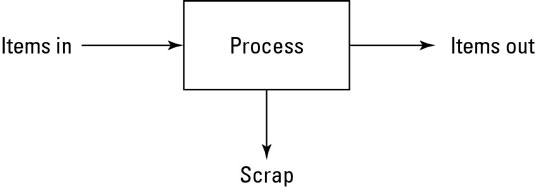
Formula for HR Yield:

Example:
Consider a recruitment process where the HR team initiates the hiring process for 50 candidates. After a series of interviews and assessments, 40 candidates are successfully hired. The HR Yield would be calculated as follows:

This indicates that the recruitment process has an 80% success rate in terms of hiring qualified candidates out of the total number of initiated recruitment processes.
OEE in HR:
In HR, OEE can be tailored to measure the efficiency of various HR functions, such as training programs, onboarding processes, or talent development initiatives. The three components of Availability, Performance, and Quality are adapted to reflect HR processes.
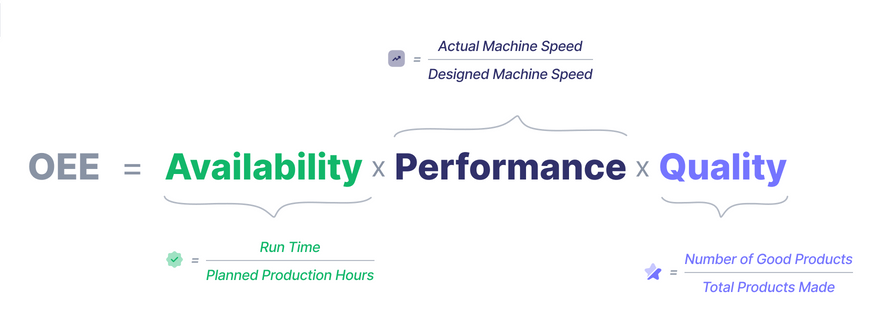
Adapted OEE Components for HR:
Availability in HR:
- Availability in HR measures the actual time spent on HR activities compared to the planned time. It accounts for factors like downtime due to system issues or unavailability of necessary resources.

Performance in HR:
- Performance in HR assesses the efficiency of HR processes in achieving predefined goals. It considers factors such as the speed of onboarding, completion rates in training programs, or the pace of talent development.

Quality in HR:
- Quality in HR evaluates the success rate of HR processes in meeting quality standards. It considers factors such as the accuracy of employee data management, the effectiveness of training programs, or the quality of performance appraisals.

Formula for HR OEE:

Example:
Consider an employee training program where the planned time is 30 hours, the actual time spent is 28 hours, the expected achievement is 90%, and the actual successful outcomes are 85%. The adapted HR OEE would be calculated as follows:
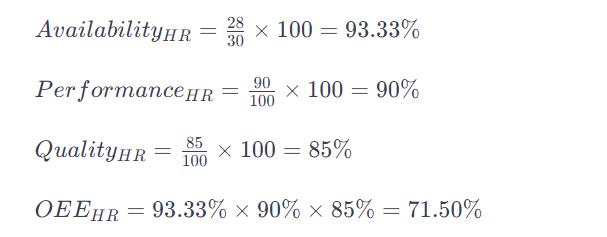
This indicates that the employee training program has a Human Resources OEE of 71.50%, reflecting the combined efficiency of availability, performance, and quality in the training initiative.
Conclusion:
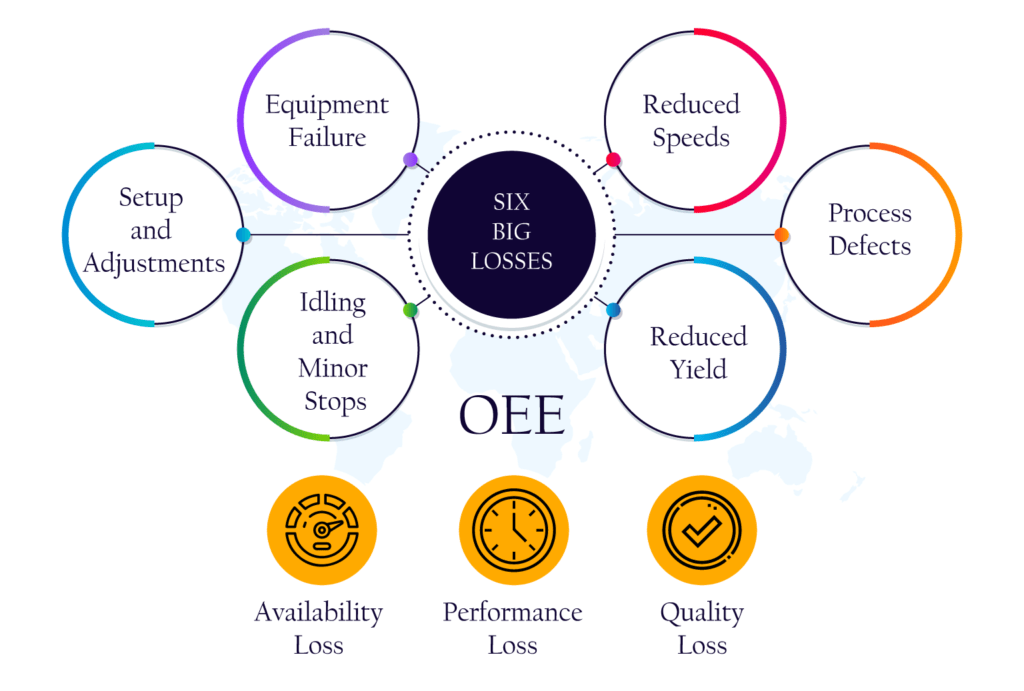
The application of Yield and OEE metrics in HR introduces a novel approach to evaluating the effectiveness and efficiency of various HR processes. By adapting these manufacturing-oriented metrics to the HR landscape, organizations can gain a more nuanced understanding of talent management, recruitment, training, and overall workforce optimization.
In an era where HR functions are pivotal to organizational success, leveraging metrics traditionally associated with manufacturing can bring a fresh perspective. Yield and OEE provide HR professionals with quantifiable measures to assess the success rates, efficiency, and quality of their initiatives, fostering a data-driven approach to human capital management.
As organizations increasingly recognize the strategic importance of HR in driving business outcomes, the adoption of such metrics offers a pathway to continuous improvement and enhanced workforce performance. The marriage of manufacturing metrics with HR practices is not merely an analytical exercise; it represents a paradigm shift toward a more holistic and optimized approach to human capital efficiency.

Dr. Arpita Sen holds a bachelor’s degree in Dental Surgery (BDS) from YMT Dental College and Hospital, Navi Mumbai. She also holds an MBA in Human Resources from Narsee Monjee Institute of Management Studies (NMIMS), Mumbai, where she graduated as a double gold medallist. She is the co-author of Not a Rat Race: Success Mantras of World Athletes (2023), and Winning as Husband and Wife: Decoding the Success Mantras of Marriage (2026), co-written with Abhirup. She currently leads Learning, Organization Development, DEI, Culture, Talent and HR Strategy at a multinational organization. She writes on growth, leadership, and the future of work in her blogs, mindofhr.com and hustlerguru.com, and has been featured across several speaking platforms, podcasts and panel discussions. In her free time, she enjoys travelling, reading novels, singing and performing classical dance. She can be reached on Instagram at @authorarpitasen and on LinkedIn
Read her books:
Not a Rat Race: Success Mantras of World Atheletes
Winning as Husband and Wife: Decoding the Success Mantras of Marriage