

In recent years, the field of project management has undergone a profound metamorphosis, shedding its traditional image as a linear discipline to emerge as a dynamic and multifaceted domain. This evolution is a direct response to the ever-shifting landscape of industries and businesses, which demand a more versatile and adaptive approach to project execution. The traditional, step-by-step methodologies have given way to a more fluid and holistic perspective, acknowledging that successful project management requires a nuanced understanding of various interconnected factors.
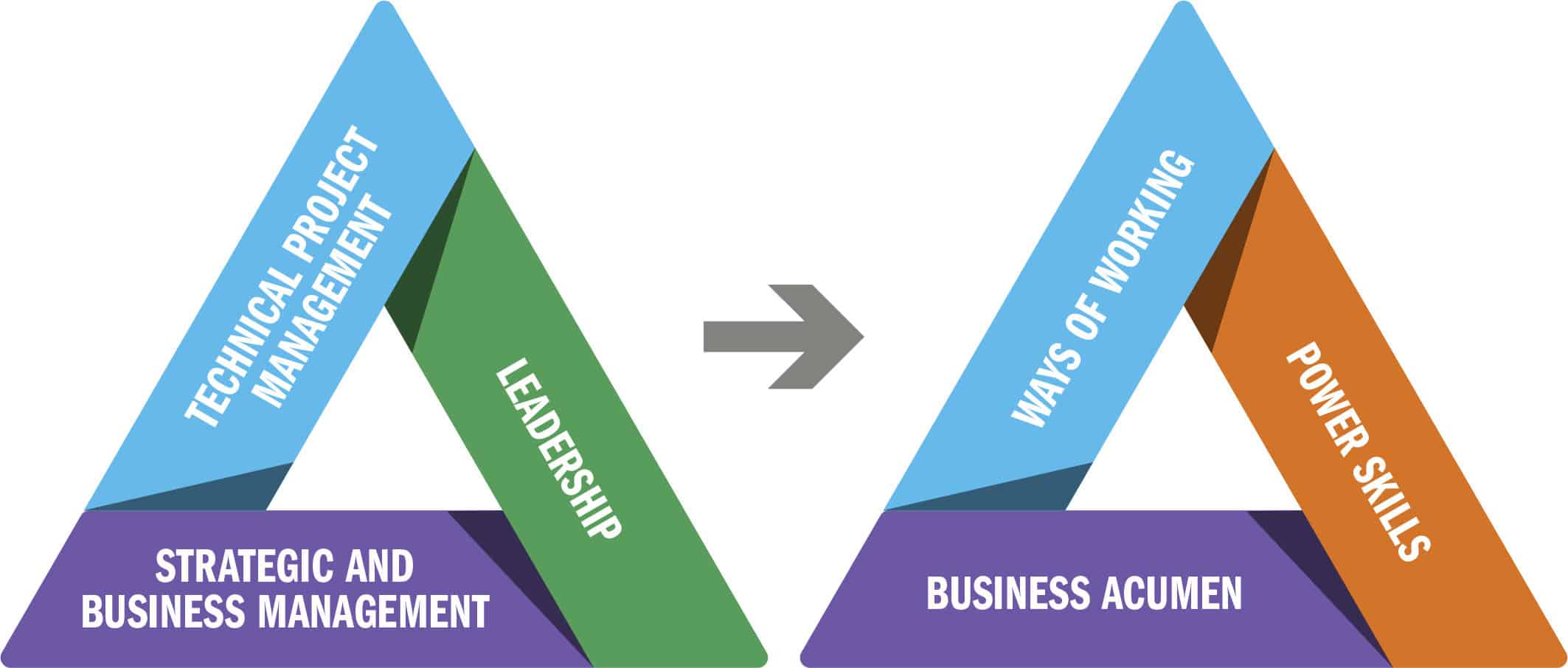
This paradigm shift in project management’s nature and requirements prompted the Project Management Institute (PMI) to adopt a proactive stance. In recognizing the need for project managers to cultivate a broader skill set, PMI introduced the Talent Triangle—an innovative framework designed to guide contemporary project managers through the intricacies of today’s complex professional landscape. Rather than viewing project management as a linear process, the Talent Triangle encourages professionals to embrace a comprehensive approach that incorporates technical proficiency, leadership skills, and strategic acumen.
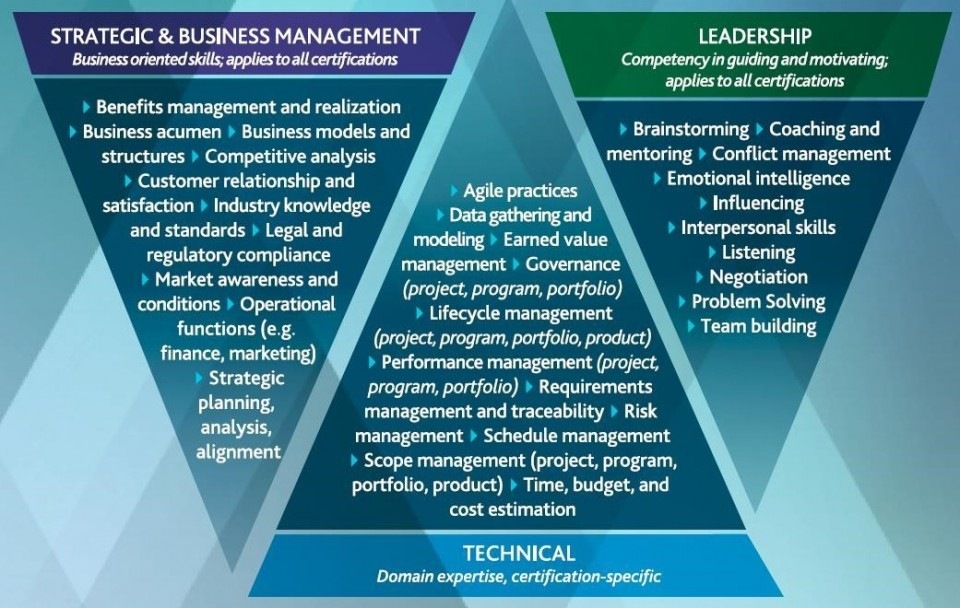
- Technical Project Management: At the core of the Talent Triangle lies Technical Project Management. It delves into the practical application of project management tools and techniques, providing the groundwork for successful project execution.
- Scenario: Envision a project manager steering the implementation of a new software system. Technical skills encompass scope definition, risk management, and proficiency in project management software, ensuring a seamless project lifecycle.
- Leadership: Leadership is the catalyst that transforms a project from a set of tasks into a unified effort. The Talent Triangle places a spotlight on a project manager’s ability to inspire, motivate, and guide their team toward success.
- Scenario: In the face of unexpected challenges, a project manager with strong leadership skills steps in to address concerns, inspire the team, and foster a positive team culture, ensuring collective resilience and success.
- Strategic and Business Management: This dimension underscores the importance of aligning projects with organizational goals. A project manager must possess an understanding of the broader business context to ensure their endeavors contribute to overall organizational success.
- Scenario:
Leading the development of a new product, a project manager with strategic and business management skills ensures alignment with the company’s vision, addresses market demands, and adds significant value to the business.
- Scenario:
Extension of the Talent Triangle:
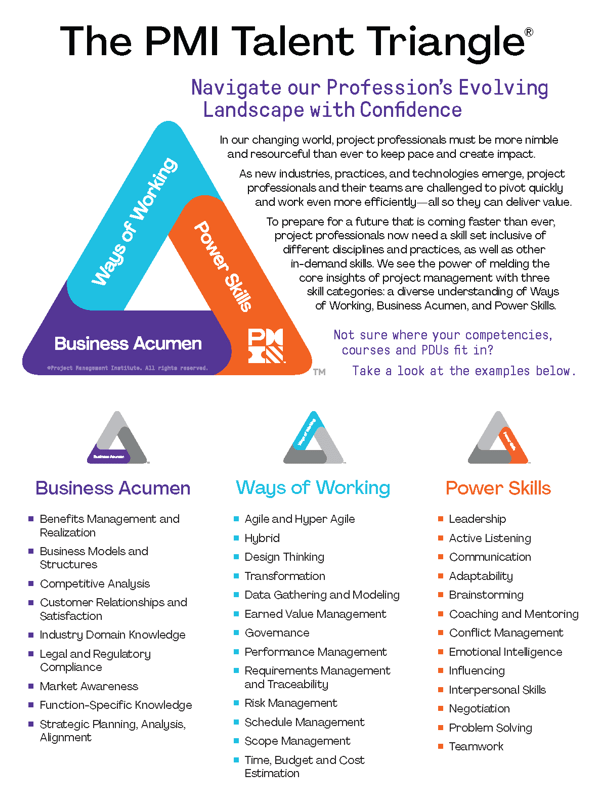
- Business Acumen: Business acumen extends the strategic and business management aspect, requiring project managers to understand organizational operations and make decisions that impact the bottom line positively.
- Scenario: Leading a cost-saving initiative, a project manager with strong business acumen analyzes financial data, identifies efficiency improvements, and makes decisions that benefit both the project and the organization’s financial health.
- Power Skills: The inclusion of Power Skills emphasizes the importance of interpersonal skills—communication, emotional intelligence, and collaboration. These skills are instrumental in building relationships with team members, stakeholders, and clients.
- Scenario: Operating within a cross-functional team, a project manager relies on power skills to communicate effectively, navigate conflicts, and build a cohesive team, fostering a positive and productive work environment.
- Ways of Working: In an era of rapid change, the Ways of Working dimension underscores adaptability and agility. Project managers must embrace new methodologies, stay informed about industry best practices, and foster a culture of continuous improvement.
- Scenario: Embracing agile methodology for the first time, a project manager adapts to new ways of working, learning agile principles, and encouraging the team to embrace iterative development, ensuring responsiveness to changing requirements.
Conclusion:
In conclusion, the expanded PMI Talent Triangle, enriched with Business Acumen, Power Skills, and Ways of Working, offers a comprehensive guide for project management excellence. Project managers equipped with this holistic skill set are not only adept at navigating the complexities of modern projects but also excel in leading diverse teams and strategically contributing to organizational success. As the project management landscape evolves, embracing this comprehensive approach becomes imperative for professionals aspiring to thrive in their project management careers.

Dr. Arpita Sen holds a bachelor’s degree in Dental Surgery (BDS) from YMT Dental College and Hospital, Navi Mumbai. She also holds an MBA in Human Resources from Narsee Monjee Institute of Management Studies (NMIMS), Mumbai, where she graduated as a double gold medallist. She is the co-author of Not a Rat Race: Success Mantras of World Athletes (2023), and Winning as Husband and Wife: Decoding the Success Mantras of Marriage (2026), co-written with Abhirup. She currently leads Learning, Organization Development, DEI, Culture, Talent and HR Strategy at a multinational organization. She writes on growth, leadership, and the future of work in her blogs, mindofhr.com and hustlerguru.com, and has been featured across several speaking platforms, podcasts and panel discussions. In her free time, she enjoys travelling, reading novels, singing and performing classical dance. She can be reached on Instagram at @authorarpitasen and on LinkedIn
Read her books:
Not a Rat Race: Success Mantras of World Atheletes
Winning as Husband and Wife: Decoding the Success Mantras of Marriage