








When aiming to fill a position within our organization, the urgency to have the new hire take charge of responsibilities looms large. Yet, the criticality of comprehensive training and effective onboarding cannot be overlooked, as they significantly influence the future success of our recruits. But how do we strike the right balance in determining the timeline for this transition?
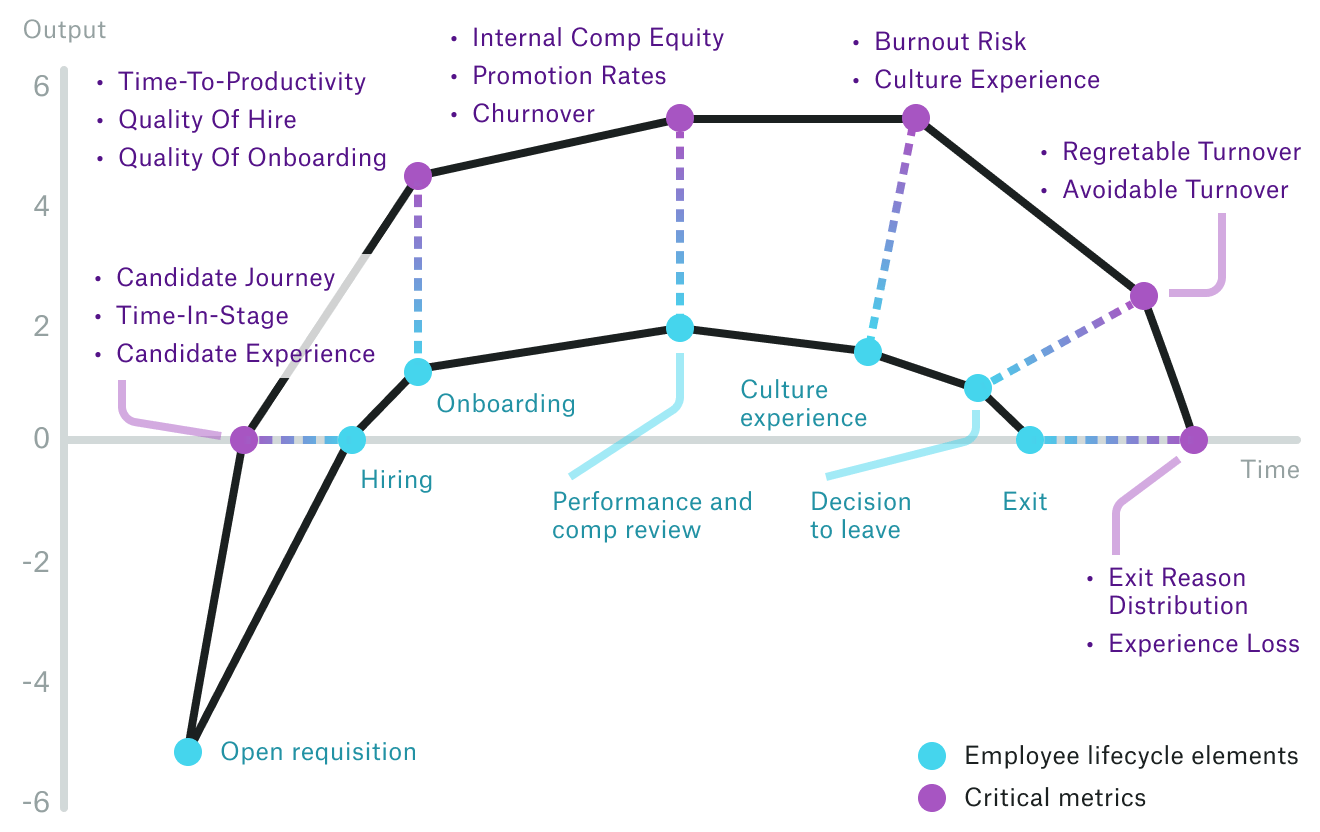
Enter the realm of “time to productivity” (TTP) metric, a pivotal indicator showcasing the duration new hires require to commence contributing to the organization at the anticipated level for their role. Beyond a mere countdown, TTP offers valuable insights into the efficacy of recruitment, onboarding, and talent management practices.
In today’s corporate landscape, a burgeoning number of enterprises are embracing the tracking of this metric. But what exactly does time to productivity entail?
In essence, time to productivity encapsulates the duration taken by a new hire to commence making meaningful contributions to an organization or company. The shorter this window, the more favorable the outcome. However, it’s essential to acknowledge that reaching full productivity might span up to a year, with the timeline varying across different seniority levels.
Now, the question arises: How does one calculate time to productivity?

While there’s no one-size-fits-all approach owing to the multifaceted nature of employee productivity, measuring TTP can prove to be intricate and time-consuming. One method involves delineating specific Key Performance Indicators (KPIs) for each role and tracking the time required for a new hire to achieve a satisfactory level in each KPI. However, this necessitates a robust KPI framework across all onboarding programs and a scalable tracking mechanism.
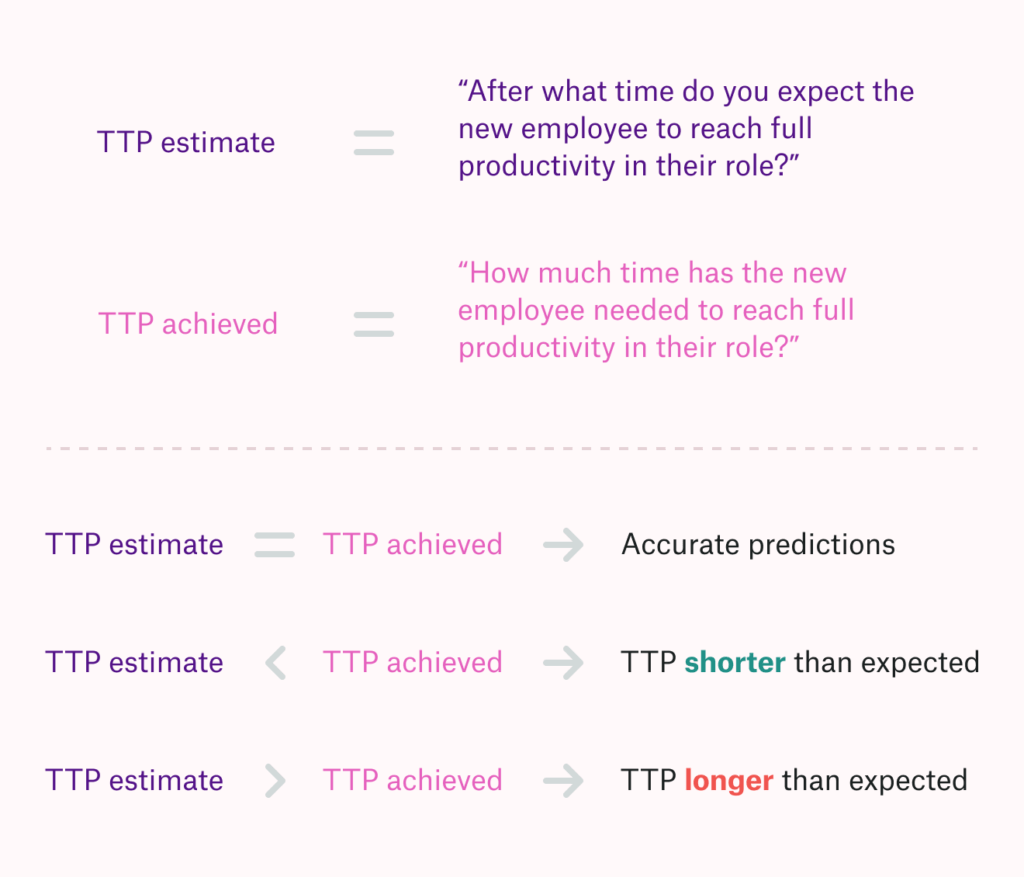
Alternatively, a pragmatic approach could involve gauging managers’ estimates regarding the timeframe for new employees to attain full productivity, juxtaposed against the actual results. This not only facilitates tracking the days to achieved productivity across teams and roles but also unveils any disparities between leaders’ productivity benchmarks and the actual outcomes of hiring and onboarding endeavors.
Delving deeper, it’s imperative to calculate the cost incurred during the employee adaptation phase. This includes factoring in the salaries of both the new hires and their managers/mentors. By scrutinizing these costs vis-à-vis the TTP metric, organizations can gauge the efficacy of their HR processes and make informed decisions regarding resource allocation.
Transitioning from a cost-centric perspective to a strategic outlook, it’s vital to view the adaptation period as a long-term investment. For instance, companies in the Software as a Service (SaaS) domain, such as Salesforce or Zendesk, often opt for prolonged onboarding programs for roles like Tech Customer Support and Customer Success. Despite the initial resource allocation, this approach cultivates a talent reservoir for future roles within the organization, thereby fostering sustainable growth.

However, if the passage of time reveals persistent struggles in attaining full productivity, a reevaluation of talent acquisition and management practices is warranted. This entails ensuring alignment between job requirements and candidates’ skills, leveraging effective evaluation methods during the selection process, and prioritizing comprehensive onboarding programs.
Moreover, the pivotal role of leaders and managers cannot be overstated. They wield a profound influence on team dynamics and performance. Thus, investing in their training and development is indispensable for fostering a conducive work environment conducive to productivity and retention.
In essence, the journey towards optimizing time to productivity encompasses a multifaceted approach, intertwining recruitment, onboarding, and management strategies. By leveraging the TTP metric as a guiding beacon, organizations can navigate this terrain with precision, unlocking the full potential of their workforce while fostering sustained growth and success.

Dr. Arpita Sen holds a bachelor’s degree in Dental Surgery (BDS) from YMT Dental College and Hospital, Navi Mumbai. She also holds an MBA in Human Resources from Narsee Monjee Institute of Management Studies (NMIMS), Mumbai, where she graduated as a double gold medallist. She is the co-author of Not a Rat Race: Success Mantras of World Athletes (2023), and Winning as Husband and Wife: Decoding the Success Mantras of Marriage (2026), co-written with Abhirup. She currently leads Learning, Organization Development, DEI, Culture, Talent and HR Strategy at a multinational organization. She writes on growth, leadership, and the future of work in her blogs, mindofhr.com and hustlerguru.com, and has been featured across several speaking platforms, podcasts and panel discussions. In her free time, she enjoys travelling, reading novels, singing and performing classical dance. She can be reached on Instagram at @authorarpitasen and on LinkedIn
Read her books:
Not a Rat Race: Success Mantras of World Atheletes
Winning as Husband and Wife: Decoding the Success Mantras of Marriage