








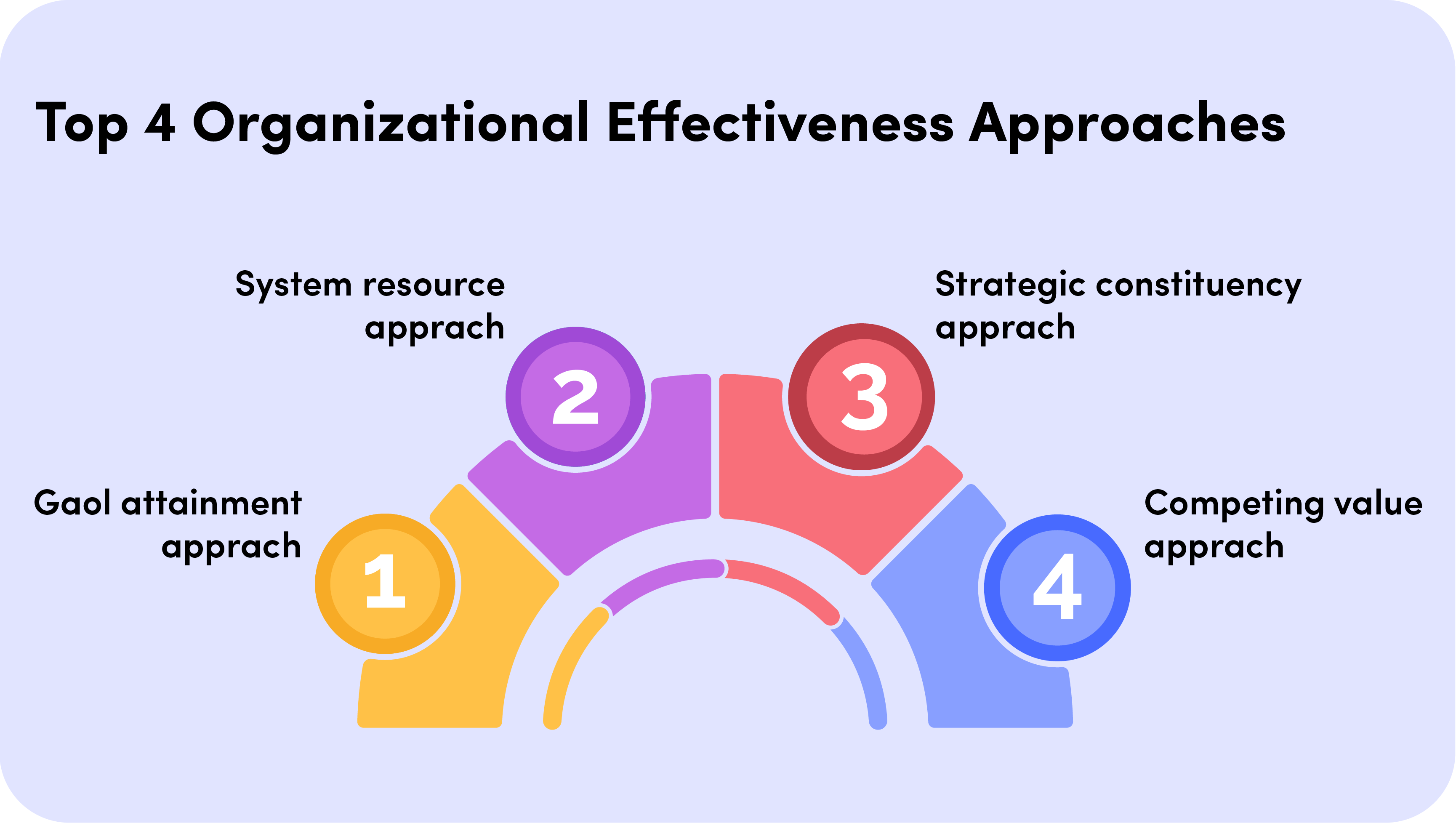
Organizational effectiveness is a critical factor in determining the success and longevity of a company. It encompasses the ability of an organization to efficiently utilize its resources, meet its goals, and satisfy its stakeholders. Over the years, various approaches have been developed to measure and enhance organizational effectiveness. Here are four of the most prominent approaches, along with examples of top companies that have implemented them successfully:
1. System Resource Approach
The System Resource Approach views an organization as an open system that acquires inputs, undergoes transformation processes, and generates outputs. This approach emphasizes the importance of obtaining and managing valuable resources from the external environment to power the organization’s operations. Key factors to consider include the price of inputs, relations with external stakeholders, and the quality of human resources.
Example: Amazon, known for its efficient supply chain and logistics, has mastered the System Resource Approach. By carefully managing its relationships with suppliers, logistics partners, and customers, Amazon has been able to optimize its resource acquisition and utilization, leading to its dominance in the e-commerce industry.
2. Strategic Constituency Approach
The Strategic Constituency Approach suggests that an organization is effective when it satisfies the demands of those constituencies in its environment upon whom it depends for survival and success. This approach takes into account the diverse interests and evaluation criteria of various stakeholders, both internal and external to the organization.
Example: Apple, with its strong focus on customer satisfaction and loyalty, exemplifies the Strategic Constituency Approach. By consistently delivering innovative products and services that cater to the needs and preferences of its target market, Apple has built a devoted customer base that contributes to its ongoing success.
3. Goal Attainment Approach
The Goal Attainment Approach measures organizational effectiveness based on the degree to which an organization achieves its predetermined goals. This approach assumes that organizations are rational, goal-seeking entities and that effectiveness is determined by the output side, i.e., the accomplishment of organizational objectives.
Example: Microsoft, under the leadership of Satya Nadella, has successfully implemented the Goal Attainment Approach. By setting clear, measurable goals for growth in cloud computing, productivity software, and gaming, Microsoft has been able to transform itself into a more agile and innovative company, driving its stock price to record highs.
4. Competing Values Approach
The Competing Values Approach recognizes that organizations often face competing demands and values, and that effectiveness requires balancing these tensions. This approach suggests that organizations should strive for a balance between flexibility and control, as well as between internal focus and external focus.
Example: Google, known for its innovative and employee-centric culture, has embraced the Competing Values Approach. By fostering a work environment that encourages creativity and collaboration while maintaining a strong focus on results, Google has been able to attract and retain top talent, driving its success in the technology industry.
Many top companies have recognized the importance of organizational effectiveness and have established dedicated offices or teams to oversee and enhance it. For example, Amazon has an Organizational Effectiveness team that works to optimize the company’s processes and structures, while Microsoft has an Organizational Effectiveness and Change Management team that supports the company’s transformation initiatives.
In conclusion, organizational effectiveness is a multifaceted concept that requires a strategic and holistic approach. By adopting one or more of the approaches outlined above, companies can improve their resource management, stakeholder satisfaction, goal achievement, and ability to navigate competing demands. As the business landscape continues to evolve, the importance of organizational effectiveness will only grow, making it a critical area of focus for companies seeking to thrive in the long term.

Dr. Arpita Sen holds a bachelor’s degree in Dental Surgery (BDS) from YMT Dental College and Hospital, Navi Mumbai. She also holds an MBA in Human Resources from Narsee Monjee Institute of Management Studies (NMIMS), Mumbai, where she graduated as a double gold medallist. She is the co-author of Not a Rat Race: Success Mantras of World Athletes (2023), and Winning as Husband and Wife: Decoding the Success Mantras of Marriage (2026), co-written with Abhirup. She currently leads Learning, Organization Development, DEI, Culture, Talent and HR Strategy at a multinational organization. She writes on growth, leadership, and the future of work in her blogs, mindofhr.com and hustlerguru.com, and has been featured across several speaking platforms, podcasts and panel discussions. In her free time, she enjoys travelling, reading novels, singing and performing classical dance. She can be reached on Instagram at @authorarpitasen and on LinkedIn
Read her books:
Not a Rat Race: Success Mantras of World Atheletes
Winning as Husband and Wife: Decoding the Success Mantras of Marriage