

How Decentralized Learning Hubs Future-Proof Your Workforce for Chaos, Change, and Complexity
When the world zigzags, fragile organizations break, resilient ones survive — but anti-fragile ones grow stronger. In today’s era of black swan events, technological disruption, and socio-economic volatility, organizations need more than just resilience. They need a system of learning that evolves under pressure — one that builds strength from uncertainty itself. Enter: Capability Academies.
“In times of chaos, your organization’s real competitive advantage is how quickly it can learn, unlearn, and re-learn — not at the center, but at the edges.” – Dr. Arpita Sen
What is Anti-Fragility, and Why Does it Matter Now?
The term anti-fragile, coined by Nassim Nicholas Taleb, describes systems that don’t just endure shocks — they improve because of them. Think: biological evolution, muscle growth, or startups born during recessions.
In the corporate context, anti-fragility is about designing systems that adapt and benefit from market shifts, crises, and transformation waves. That’s where Capability Academies come in — decentralized, employee-led learning ecosystems embedded deep within business units.
“Anti-fragility in organizations means decentralizing intelligence, empowering people to solve their own problems, and building learning into the DNA of daily work.” – Dr. Arpita Sen
What Are Capability Academies?
A Capability Academy is more than a training program — it’s a strategic learning hub built around business-critical skills. Unlike traditional L&D that flows top-down, academies are embedded within functions, powered by experts, and connected to real work.
They don’t teach generic content — they teach your people how to think in uncertainty, solve new problems, and lead change from within.
Key Features:
- Decentralized ownership – Each business function runs its own academy aligned to its unique challenges.
- Real-time feedback loops – Learning is based on current market, customer, and project needs.
- Integrated into work – Employees apply learning immediately, shortening the gap between theory and execution.
- Co-created by internal experts – Your high-performers become faculty, not just consumers.
Companies Doing It Right
🔹 Unilever – Future Skills Academy
Unilever launched a global platform called the Future Skills Academy, which includes 90+ academies across functions and geographies. It’s not run by HR — it’s owned by the business, tailored to each unit’s transformation agenda.
🔹 Ericsson – Technical Capability Academies
Ericsson created technical academies where engineers learn from each other in micro-learning formats. These are open-source internally, agile, and updated in real-time with market changes.
🔹 Adobe – Digital Academy
Adobe runs a decentralized learning model to upskill talent in design thinking, data analytics, and customer-centricity. Participants work on live business projects during the learning process.
“A capability academy doesn’t end when the course ends — it begins when the real problem-solving starts.” – Dr. Arpita Sen
Why Capability Academies Build Anti-Fragility
When learning becomes business-critical and continuous, your organization builds adaptive capacity. Here’s how Capability Academies enable anti-fragility:
| Trait | Traditional Org | Anti-Fragile Org via Academies |
|---|---|---|
| Learning Ownership | Central L& OD | Business Unit & Employee-Driven |
| Response to Crisis | Reactive | Proactive + Opportunistic |
| Skill Currency | Static | Dynamic & Contextual |
| Change Leadership | Top-Down | Multi-Nodal & Peer-Led |
| Innovation Velocity | Slow | Rapid & Experimental |
“When everyone owns capability development, you no longer need to push transformation — it starts pushing itself.” – Dr. Arpita Sen
How to Start Your Capability Academy Journey
Starting doesn’t require a million-dollar tech stack. Here’s a phased approach:
Step 1: Identify Critical Capabilities
Look at your business strategy. What skills will define success in 1–3 years? These become your academy themes — e.g., Digital Sales, Crisis Leadership, Design Thinking, AI Literacy.
Step 2: Decentralize Learning Ownership
Setup cross-functional learning squads with internal experts, team leads, and HRBPs. Let the business own learning outcomes.
Step 3: Integrate with Live Work
Design sprints, peer reviews, internal project showcases — bring learning into the workflow, not away from it.
Step 4: Measure Impact in Real Time
Use metrics like capability heatmaps, team velocity, idea-to-implementation ratios, and revenue impact from academy-led innovation.
“If you can’t measure it, you can’t scale it — but if you can feel its pulse inside teams, you know you’re building anti-fragility.” – Dr. Arpita Sen
ROI of Capability Academies: Real Numbers, Real Impact
🔸 Unilever reports that academy-driven employees are 25% more likely to be promoted or deployed in transformation projects.
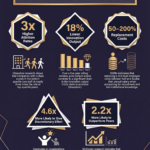
🔸 Deloitte notes that organizations with capability academies are 3x more likely to be innovation leaders in their sector.
🔸 Internal research by IBM found that capability academies led to a 43% improvement in time-to-skill for high-demand roles.
These aren’t just “feel good” programs. They are business accelerators in disguise.
The Future Belongs to the Anti-Fragile
The next disruption isn’t a matter of if — it’s a matter of when. Capability Academies aren’t a trend; they are a strategic necessity. They decentralize wisdom, empower frontline innovation, and create shock-absorbing capacity in every corner of the business.
“The future doesn’t reward the strongest or the smartest — it rewards those who can adapt the fastest. Capability Academies are how we operationalize that adaptation at scale.” – Dr. Arpita Sen
In a world spinning with uncertainty, Capability Academies don’t just teach your people how to survive. They teach them how to thrive through chaos — and build a company that’s better because of it.

Dr. Arpita Sen holds a bachelor’s degree in Dental Surgery (BDS) from YMT Dental College and Hospital, Navi Mumbai. She also holds an MBA in Human Resources from Narsee Monjee Institute of Management Studies (NMIMS), Mumbai, where she graduated as a double gold medallist. She is the co-author of Not a Rat Race: Success Mantras of World Athletes (2023), and Winning as Husband and Wife: Decoding the Success Mantras of Marriage (2026), co-written with Abhirup. She currently leads Learning, Organization Development, DEI, Culture, Talent and HR Strategy at a multinational organization. She writes on growth, leadership, and the future of work in her blogs, mindofhr.com and hustlerguru.com, and has been featured across several speaking platforms, podcasts and panel discussions. In her free time, she enjoys travelling, reading novels, singing and performing classical dance. She can be reached on Instagram at @authorarpitasen and on LinkedIn
Read her books:
Not a Rat Race: Success Mantras of World Atheletes
Winning as Husband and Wife: Decoding the Success Mantras of Marriage